Monroe Acreage or Subdivision: What Suits You Best?
June 11, 2026
June 11, 2026
Choosing between a subdivision home and acreage in Monroe can shape your daily life more than almost any floor plan ever will. You may be asking yourself whether you want convenience and neighborhood structure or more land and breathing room. The good news is that Monroe offers both, but each option comes with a different set of tradeoffs around utilities, upkeep, privacy, and resale. If you are trying to decide what fits your lifestyle and budget best, this guide will help you sort through it. Let’s dive in.
Monroe sits inside the larger Walton County market, and that creates two very different housing patterns. Monroe city had an estimated 16,270 residents in 2024, while Walton County had 109,792, and that difference shows up in how homes are laid out and served.
Within the city, residential zoning supports more moderate-lot neighborhoods and subdivisions. In the county, rural estate districts are designed for larger lots, more space between homes, and a more sparsely developed setting. That means your decision is not just about house style. It is also about the kind of property system and day-to-day routine you want.
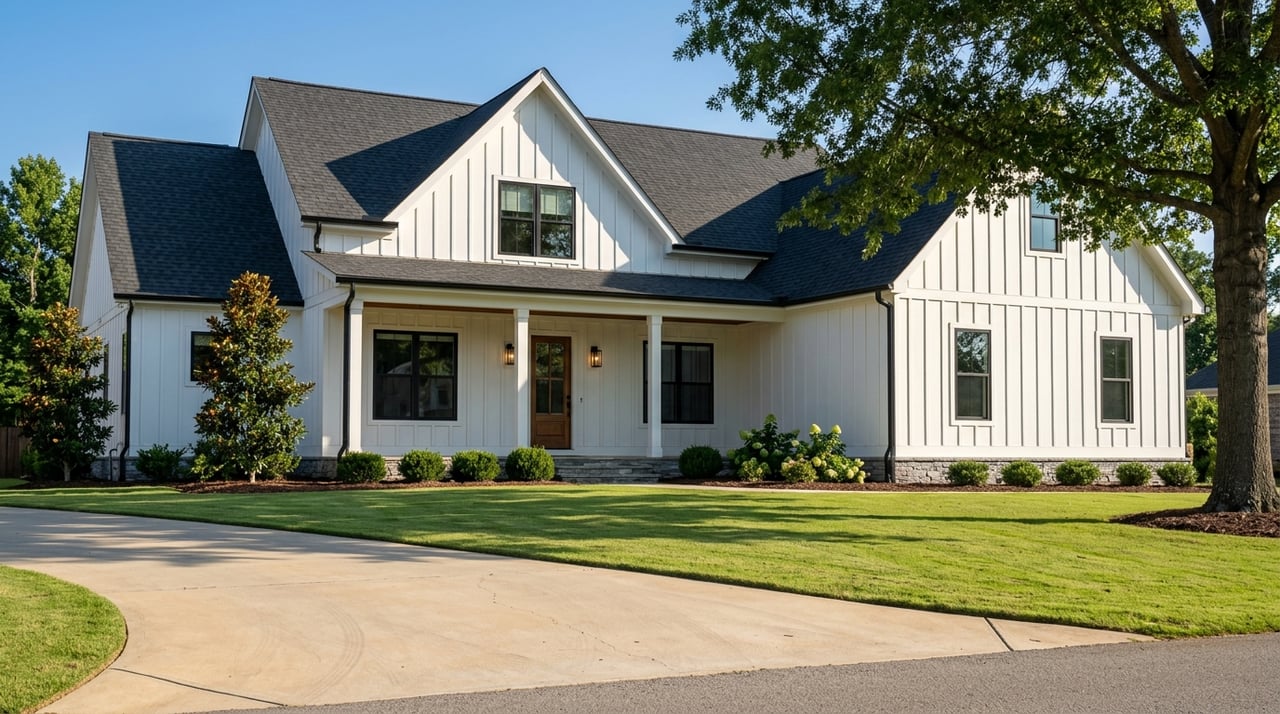
For many buyers, a subdivision in Monroe means simplicity and predictability. Monroe’s R-1A zoning is built around detached single-family homes on moderate-sized lots, and the city code describes these areas as having a street-grid pattern and a highly pedestrian character.
One practical detail stands out right away. The city requires sidewalks on both sides of streets in all subdivisions, which supports a more connected neighborhood layout. In larger developments, the city also requires impact studies that review traffic, utilities, and school capacity, and some larger projects must set aside common open space and include amenities.
One of the biggest advantages of many subdivision properties in Monroe is access to municipal services. The Monroe Utilities Department provides electric, cable television, broadband internet, voice over IP phone service, natural gas, water, and wastewater.
The city also provides weekly curbside household garbage pickup. If public sewer is available, homes must connect to it, and septic tanks are not allowed in that situation. For buyers who want fewer infrastructure questions after move-in, that can be a major plus.
Subdivision living often comes with a smaller yard and a more standardized exterior setting. That usually means less mowing, less tree-line maintenance, and fewer unknowns tied to drainage, septic, or long private driveways.
If your goal is a home that feels easier to manage week to week, a subdivision may fit well. It can also be a strong match if you want a more conventional setup that many future buyers will immediately understand.
If your priority is space, privacy, and flexibility, acreage around Monroe may be the better fit. Walton County’s zoning provides the clearest picture of what rural estate living is designed to be.
The A1 Rural Estate district is intended to preserve rural character and large-acreage, sparsely populated residential areas, with a minimum lot area of 2 acres. The A2 Rural Estate district is similar, with a 1.5-acre minimum lot size. These districts also serve as buffers between agricultural uses and more intensive development.
Acreage often appeals to buyers who want more distance between neighbors and more room to spread out. Depending on the property, that can mean space for outbuildings, pets, gardens, hobby use, or simply a quieter setting with more elbow room.
That extra flexibility is one of the biggest reasons buyers look outside a typical subdivision. If you know you want land for more than just a house and a backyard, acreage can open up options that a smaller lot may not.
The biggest mistake buyers make with acreage is assuming all land is equally usable. In reality, the value of a larger property depends on what the lot can support, not just how many acres it shows on paper.
Georgia’s onsite sewage guidance notes that lot size needs can vary depending on whether a property has public water or an individual water supply. It also notes that larger homes, pools, tennis courts, and outbuildings may require more lot area, while slope, drainage, topography, and soil conditions can affect whether a site works for septic at all.
With acreage, utilities become a much bigger part of your buying decision. Before you buy, you should confirm whether sewer is available, what water source serves the lot, and whether the property still works if you want to add features later.
This matters because a larger home footprint, a workshop, or a pool can change what the lot needs to function properly. Monroe’s own code states that lot area increases when public sanitary sewer is not used and the county health department requires a larger lot for proper septic operation.
If you are considering a rural or larger-lot property near Monroe, make sure you verify:
These details can affect cost, usability, and resale later. A beautiful tract with poor utility fit may not function the way you expect.
This is often the heart of the decision. A subdivision usually offers more convenience, while acreage usually offers more privacy.
In a subdivision, you are more likely to have sidewalks, easier access to municipal services, and a more connected neighborhood setup. On acreage, you are more likely to get distance between homes, room for extra uses, and a property that feels more self-directed.
Neither option is better across the board. The better choice depends on whether you value convenience or independence more in your daily routine.
Commute time may not seem like the deciding factor at first, but it can become one quickly. Monroe city’s mean travel time to work is 32.1 minutes, while Walton County’s is 34.4 minutes.
Monroe is connected by U.S. Highway 78 and sits about 11 miles from I-20. Hartsfield-Jackson Atlanta International Airport is about 52 miles away. For many buyers, even a few extra miles outside the city center can have a real effect on everyday convenience.
Acreage can be appealing on paper, but a longer drive is something you feel repeatedly. If you commute often, run frequent errands, or want easier access to city services, that tradeoff deserves careful thought.
On the other hand, if privacy and land matter more to you than shaving minutes off your drive, a rural setting may still be worth it. This is where your personal routine matters more than general advice.
Both subdivision homes and acreage properties can sell in the Monroe area, but they do not always attract the same buyers. Recent market data for the three months ending April 2026 showed a median sale price of $329,830 in Monroe city and $385,822 in Monroe County, with median days on market of 81 and 83, respectively.
That suggests both types of properties are active, but pricing and timing can vary based on location, condition, and how usable the land really is. A large parcel is not automatically more valuable if buyers see limitations tied to septic, drainage, or layout.
A standard subdivision home usually appeals to more buyers because the setup is familiar and easier to compare. Buyers often understand city utilities, smaller-lot maintenance, and neighborhood layouts quickly, which can help with resale.
Acreage can still resell well, but it often attracts a narrower audience. The buyer who wants land is usually looking for a very specific type of property, and they may pay close attention to whether the acreage is truly useful, not just large.
If you are torn between the two, it helps to strip the choice down to daily lifestyle. Ask yourself what kind of ownership experience you really want.
Choose a subdivision if you want:
Choose acreage if you want:
In Monroe, the subdivision versus acreage decision is really a convenience versus flexibility decision. Subdivisions tend to make daily life simpler with city services, sidewalks, and a more standardized setup. Acreage tends to offer more room and privacy, but it also requires more due diligence and often more owner-managed responsibility.
If you know what matters most to you now and what might matter five years from now, the right fit becomes much clearer. If you want help comparing neighborhood homes, custom properties, or land opportunities around Monroe, Dinu Dariy can help you sort through the details and find the option that matches your goals.
Stay up to date on the latest real estate trends.


Want an agent who'll really listen to what you want in a home? Need an agent who knows how to effectively market your home so it sells? Give me a call! I'm eager to help and would love to talk to you.