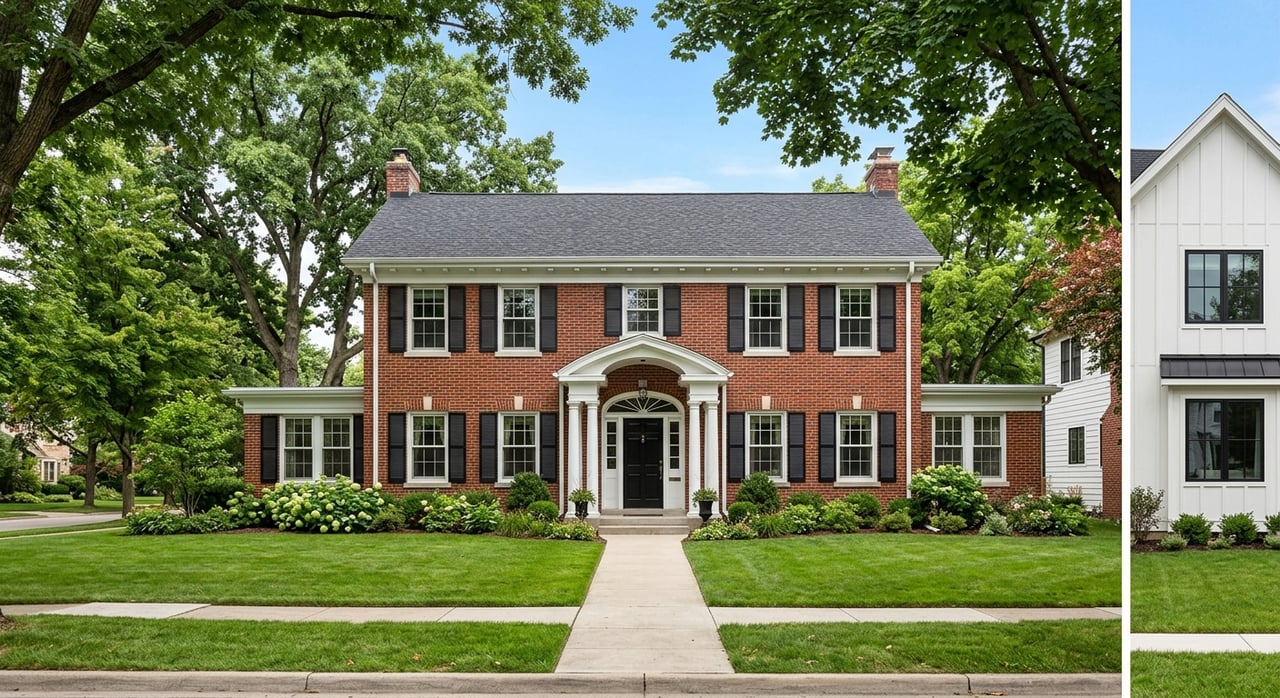
Small-Town Living With Big-City Access In Monroe, GA
May 28, 2026
May 28, 2026
If you want a slower pace without feeling cut off from everything, Monroe, Georgia, deserves a closer look. Many buyers are trying to balance space, character, and everyday convenience, and that can be hard to find in one place. Monroe stands out because it offers a historic small-town setting with access to major roads, regional job centers, and daily amenities. Let’s dive in.
Monroe has a clear local identity, and you can see it in the built environment right away. The city describes itself as nestled between Atlanta and Athens, with ante-bellum homes, civic buildings, and a historic downtown that shape the community’s character.
That sense of place is not accidental. Monroe’s planning framework includes multiple historic districts, individual historic sites, and overlay districts that guide preservation and infill. For you as a buyer or seller, that helps explain why parts of Monroe feel established, walkable, and visually distinct from newer suburban areas.
One of Monroe’s biggest draws is its downtown. The city promotes downtown Monroe as a destination for shopping, dining, and strolling, which gives residents more than just a pretty main street. It creates a real place to spend time on a weekday evening or a Saturday afternoon.
Monroe is also known as the Antiques Capital of Georgia, with more than 250,000 square feet of antique shopping according to the city’s economic development materials. That gives downtown a niche identity that helps it feel active and memorable, especially for people who want a town with personality instead of a more generic suburban layout.
Small-town living is not only about charm. It also depends on whether you have useful public spaces nearby, and Monroe checks that box with several city parks.
Town Green is a 1.67-acre downtown park that acts as an anchor for community activity. The city says it hosts concerts, theatrical performances, jazz bands, holiday events, orchestras, back-to-school celebrations, and a splash pad that typically runs from Memorial Day into mid-October.
That matters because it gives you a central gathering space that supports both recreation and community events. Town Green was also recognized by the Georgia Downtown Association as the 2024 Best Placemaking Project, which says a lot about how the city is investing in shared public space.
Beyond downtown, Monroe offers a range of parks that fit everyday routines:
If you are comparing Monroe with busier suburban markets, these amenities help explain why the city can feel more grounded and livable on a day-to-day basis.
A great small town can feel quiet in the best way, but it should not feel empty. Monroe has a steady event calendar that keeps the city active throughout the year.
The city’s published schedule includes events like Music on Main, Car Cruise-In, Juneteenth Celebration, Fourth of July Celebration, Halloween Happenings, the Fall Antique and Vintage Market, Holiday Shop and Stroll, and the Christmas Tree Lighting. City financial reporting also points to recurring downtown events such as concert series, festivals, car shows, and the Christmas Parade.
For you, that means Monroe offers more than housing inventory. It offers a rhythm of local activity that can make it easier to feel connected to the area after you move.
Monroe’s location is one of its strongest selling points. You get a smaller-city setting, but you are still connected to major regional routes that support commuting, business travel, and weekend plans.
According to the city’s transportation information, Monroe is close to:
This helps explain the phrase “big-city access.” Monroe is positioned between Atlanta and Athens, so you are not choosing between isolation and convenience. You are choosing a location that can give you room to breathe while still keeping larger employment centers and travel connections within reach.
Some towns depend almost entirely on outbound commuters, but Monroe also has its own employment base. The city identifies major employers and industrial users such as Walmart Distribution Center, Hitachi Automotive Systems, and Nucor Warehouse Solutions.
That mix matters because it broadens Monroe’s appeal. Some residents may commute to other parts of the region, while others may prefer to stay closer to home for work. Census data cited in the research shows a median travel time to work of 32.1 minutes, which works best as a general indicator of commuting patterns rather than a specific drive time to one destination.
For many buyers, affordability is where Monroe becomes especially interesting. Census QuickFacts show Monroe’s median value of owner-occupied homes at $259,300.
That figure is lower than Atlanta’s $439,600, lower than the Athens-Clarke County balance at $299,200, and lower than Walton County’s $339,500. Monroe’s median gross rent is $1,105, which also helps support the case that the city can offer a more accessible cost profile than some nearby markets.
That does not mean every home in Monroe is inexpensive or that values are standing still. It does mean the market has a factual affordability advantage compared with several nearby benchmarks, and that can create opportunity for first-time buyers, move-up buyers, and sellers looking to understand what makes Monroe attractive to incoming demand.
Monroe is growing, and that growth affects both inventory and long-term demand. Census estimates put Monroe’s population at 16,507 in July 2025, up 10.4% from April 2020.
Walton County grew even faster, reaching an estimated 112,696 residents in July 2025, up 16.7% from 2020. When you see that kind of growth in both the city and county, it helps explain why development pressure and housing demand continue in and around Monroe.
For buyers, this means it is important to understand where new opportunities may be emerging. For sellers, it reinforces that Monroe is on more people’s radar than it was just a few years ago.
Monroe is not a one-style market. Official city materials point to a blend of historic areas, planned residential growth, and multiple zoning categories that include large lot residential, medium lot residential, high-density residential, manufactured housing, and planned residential districts.
In practical terms, that suggests a housing mix that can include:
That variety is important if you are trying to match a home to a specific lifestyle. Some buyers want character and proximity to downtown, while others want a newer layout, more land, or a different type of neighborhood setting.
If Monroe is on your short list, it helps to think beyond square footage and price alone. The right fit often comes down to how you want to live day to day.
Ask yourself:
These questions can help you narrow down which part of Monroe fits your goals best.
If you are selling in Monroe, the city’s appeal is broader than one feature alone. Buyers are often drawn to the combination of character, convenience, and relative value.
Depending on the property, it may make sense to emphasize:
This is where local pricing strategy and presentation matter. Monroe attracts different buyer types, so your marketing should speak clearly to what makes your specific property stand out.
Monroe works because it offers a mix that many buyers want but struggle to find. You can enjoy a recognizable downtown, active public spaces, and a growing local economy without giving up regional access.
At the same time, the housing mix and cost comparisons make Monroe worth serious consideration for buyers who want more value than they may find in some nearby markets. For sellers, those same strengths can help support stronger buyer interest when a home is priced and presented well.
If you are thinking about buying or selling in Monroe or nearby northeast Atlanta communities, Dinu Dariy can help you evaluate the market, understand your options, and build a smart plan with clear, responsive guidance.
Stay up to date on the latest real estate trends.


Want an agent who'll really listen to what you want in a home? Need an agent who knows how to effectively market your home so it sells? Give me a call! I'm eager to help and would love to talk to you.