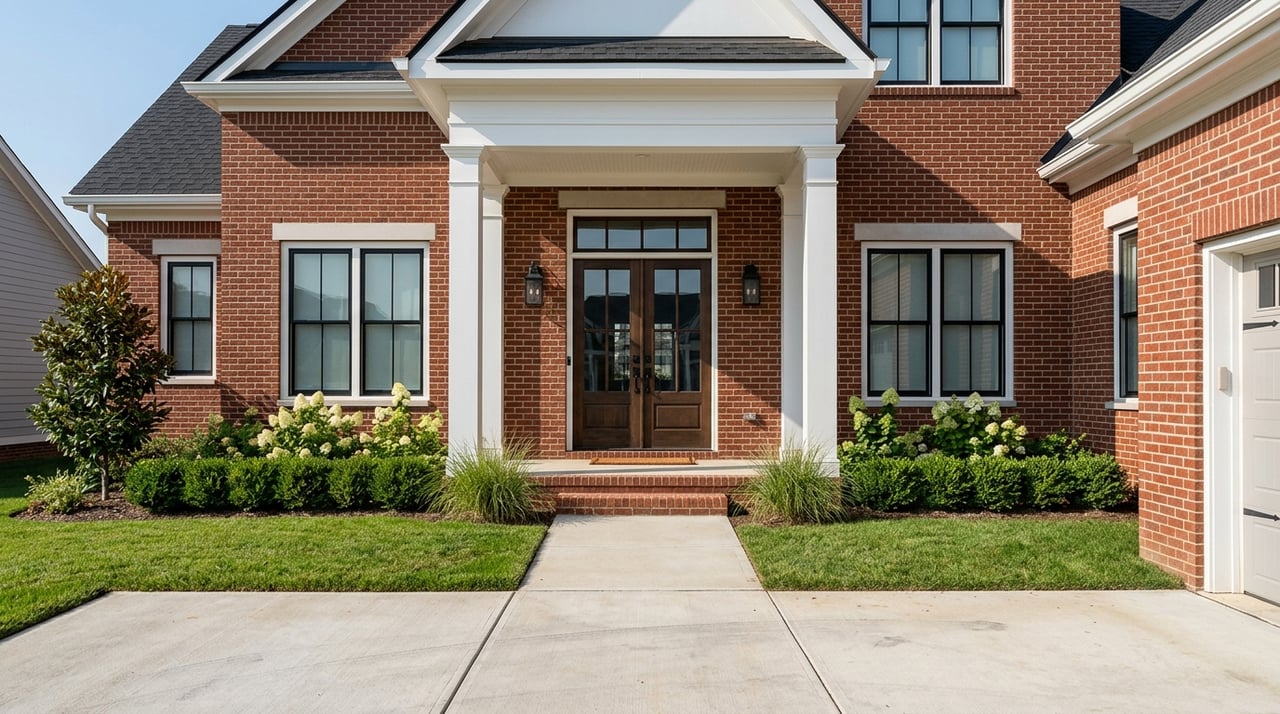
New Construction in Monroe GA for Move-Up Buyers
April 2, 2026
April 2, 2026
Thinking about moving up in Monroe, but not sure whether new construction is the right fit? You are not alone. If you want more space, newer finishes, and less immediate repair work, Monroe’s current new-home options give you several paths to consider. This guide breaks down what is available, how these communities compare, and what to ask before you sign anything. Let’s dive in.
For many move-up buyers, the appeal of new construction is simple: you can get a larger home with newer systems and more standardized finishes. That can be especially attractive if you want to avoid surprise repair projects right after closing.
The broader buyer trend supports that logic. According to the National Association of Realtors 2024 buyer profile, recent new-home buyers were often motivated by avoiding renovations and concerns about issues like plumbing or electrical problems. The same report notes that 63% of new-home buyers used a real estate agent, which shows how common it is to want guidance through the builder process.
In Monroe, that conversation matters because the local market gives you a mix of smaller planned communities, amenity-focused neighborhoods, and larger-lot projects. It is not an endless sea of new construction, but it is varied enough to give move-up buyers real choices.
Monroe’s market can look different depending on which data set you review. Redfin reports a February 2026 median sale price of $340,000, while Realtor.com reports a January 2026 median listing home price of $478,000 and labeled Monroe a buyer’s market.
That matters because many of Monroe’s new-construction options for move-up buyers sit above the lower end of the resale market. In other words, if you are shopping for a step up in size, layout, finishes, or lot style, you will likely see new construction clustered from the upper $400s into the high $600s, with a few lower-priced entry points.
The city’s development pattern also helps explain why many of these neighborhoods feel more planned. Monroe’s zoning ordinance requires certain new developments to be rezoned into planned districts, and some larger developments must include a homeowners association with mandatory membership.
If you want a newer home but are trying to stay closer to Monroe’s lower price points, Brookland Commons is the most affordable benchmark currently visible in the new-home directory. Pricing starts at $309,580 for 3 to 4 bedroom plans around 1,700 to 1,950 square feet.
For most move-up buyers, this may feel more like a starting point than the final target. Still, it is useful because it shows where the floor of Monroe’s current new-home market begins.
If your goal is a true move-up neighborhood with amenities, River Pointe deserves a close look. River Pointe by Meritage Homes starts from $471,990 and offers 4 to 5 bedroom homes.
A current 2,950-square-foot plan highlights features like a $46 per month HOA, clubhouse, pool, playground, covered patio, LVP flooring, Mohawk carpet, brick-or-stone fronts, and available 3-car garage options. Meritage also emphasizes energy efficiency and buyer-agent representation, which can appeal if you want a more structured builder experience.
If you prefer a smaller neighborhood instead of a large master-planned setting, Magnolia Ridge may stand out. This nine-lot community is selling from about $535,100.
The builder highlights finishes that many move-up buyers want to see without having to add a long list of upgrades, including quartz countertops, stainless appliances, 9-foot ceilings, shaker cabinets, and a tiled primary shower with frameless glass. That gives it a more polished feel right from the start.
Great River is planned as 60 single-family homes on spacious lots, with some homesites backing the Alcovy River. Builder materials point to quartz countertops, stainless appliances, and 9-foot ceilings.
For a move-up buyer, that combination can be attractive if you want a newer home with a more elevated finish package and a setting that feels a little less compressed than a dense subdivision.
If you are aiming much higher on size and lot presence, Pinehurst Estates is a coming-soon option with large estate lots and proposed pricing from the high $600s. Floor plans currently range from about 2,611 to 3,738 square feet.
This is one of the clearest examples of Monroe new construction serving the upper end of the move-up market. If you want the feeling of a one-street neighborhood with larger homesites, it is worth keeping on your radar.
For buyers who want land along with a new home, Legends at Old Monroe offers one of the most distinct setups. The builder says the community will feature ranch and two-story plans on 2 to 7 acre homesites.
Features include farmhouse exteriors, granite countertops, brushed-nickel lighting, stainless appliances, and USDA financing eligibility. If your move-up goal includes more privacy or usable land, this may be one of Monroe’s most interesting new-build options.
Hambrick Station is another coming-soon community, planned with 56 homes, detached garages, a green-space park, walking trails, and a playground.
This one is useful because it represents a different kind of move-up choice. Instead of acreage, it leans toward a more traditional neighborhood environment with shared outdoor features and a connected layout.
For many move-up buyers, the real question is not just which new neighborhood to choose. It is whether new construction beats resale for the lifestyle and flexibility you want.
In Monroe, resale inventory gives you much broader variation in land size and HOA structure. Realtor.com currently shows dozens of Monroe homes with no HOA, with examples on 0.5 acres, 1 acre, 1.1 acres, 2 acres, and even 5.16 acres.
That creates a clear tradeoff. New construction often gives you newer systems, more consistent finishes, and amenity packages. Resale often gives you more lot variety and a better chance of finding no-HOA options.
Here is a simple comparison:
| Option | Often Best For | Typical Strength |
|---|---|---|
| New construction | Buyers who want modern finishes and fewer near-term repairs | Newer systems, planned communities, amenity packages |
| Resale | Buyers who want wider lot choices or fewer neighborhood rules | More land variety, more no-HOA inventory, broader price spread |
The pricing spread supports that comparison. Monroe’s new-home options tend to cluster from the $300s to the high $600s, while resale and no-HOA inventory can range from the low $200s to well over $1 million.
Builder marketing can make every home sound fully loaded, but standard features and upgrades are not the same thing. In Monroe, builders advertise items like quartz, stainless appliances, LVP flooring, covered patios, and larger garages, so you will want a clear breakdown of what comes in the base price.
A good question is: Which features in the model or marketing materials cost extra? That helps you compare communities more accurately.
Do not assume one Monroe community works like another. River Pointe currently shows a $46 monthly HOA, and Monroe’s zoning rules mean some larger developments may require mandatory HOA membership.
Ask for the current dues, architectural guidelines, leasing rules, and any resale restrictions. Those details can shape your monthly cost and your long-term flexibility.
If the home is not finished yet, a builder may ask for upfront earnest money or a builder deposit. The Consumer Financial Protection Bureau recommends asking exactly when that deposit is refundable and under what conditions.
This is especially important if your timing depends on selling your current home, a job change, or financing milestones.
Some builders strongly encourage buyers to use a preferred lender, especially when incentives are involved. But the CFPB makes clear that you do not have to use the builder’s lender.
You can and should compare financing options so you understand the full cost, not just the advertised incentive.
Representation matters in new construction, but timing matters too. The National Association of Realtors explains that written buyer agreements are required before touring an MLS-listed home, and separate builder registration rules may also apply.
A practical move is to bring your buyer’s agent in before your first model-home visit. That helps keep registration, communication, and representation clear from day one.
If you are moving up in Monroe, start by deciding which upgrade matters most to you:
Once that priority is clear, your shortlist usually gets much easier. If amenities and a polished neighborhood feel are your focus, River Pointe may rise to the top. If acreage is the goal, Legends at Old Monroe may make more sense. If you want an upper-tier estate feel, Pinehurst Estates may be the better fit.
The key is to compare total lifestyle fit, not just the base price. A lower advertised number can change quickly once you factor in upgrades, HOA costs, lot premiums, and your financing structure.
Monroe’s new-construction market is not the biggest in the region, but that can actually make your search more manageable. You have a small enough pool to survey thoroughly, yet enough variety to choose between amenity communities, small upscale neighborhoods, traditional subdivision layouts, and acreage-style projects.
If you are trying to move up without taking on immediate renovation work, new construction can be a strong option. The smartest approach is to compare each community against resale alternatives, ask detailed builder questions early, and make sure you have clear representation before you start touring.
If you want help comparing Monroe new construction with resale and figuring out which option fits your next move, reach out to Dinu Dariy. You will get responsive, straightforward guidance so you can move with confidence.
Stay up to date on the latest real estate trends.
Want an agent who'll really listen to what you want in a home? Need an agent who knows how to effectively market your home so it sells? Give me a call! I'm eager to help and would love to talk to you.